Gottman Method Couples Therapy in Florida

Research-backed. Practically focused. Built for couples who want to actually change something.
Most couples who come to therapy aren't struggling because they don't love each other. They're struggling because they keep having the same fight. And no matter how many times they talk about it, nothing actually shifts.
The Gottman Method was built for exactly that problem. It's one of the most extensively researched approaches to couples therapy in the world, developed over more than four decades of studying what actually makes relationships work (and what quietly destroys them).
As a Gottman-trained therapist practicing virtually throughout Florida, I use this framework because it gives us something most approaches don't: a specific, evidence-based map for understanding what's happening between you — and a set of real tools to change it.
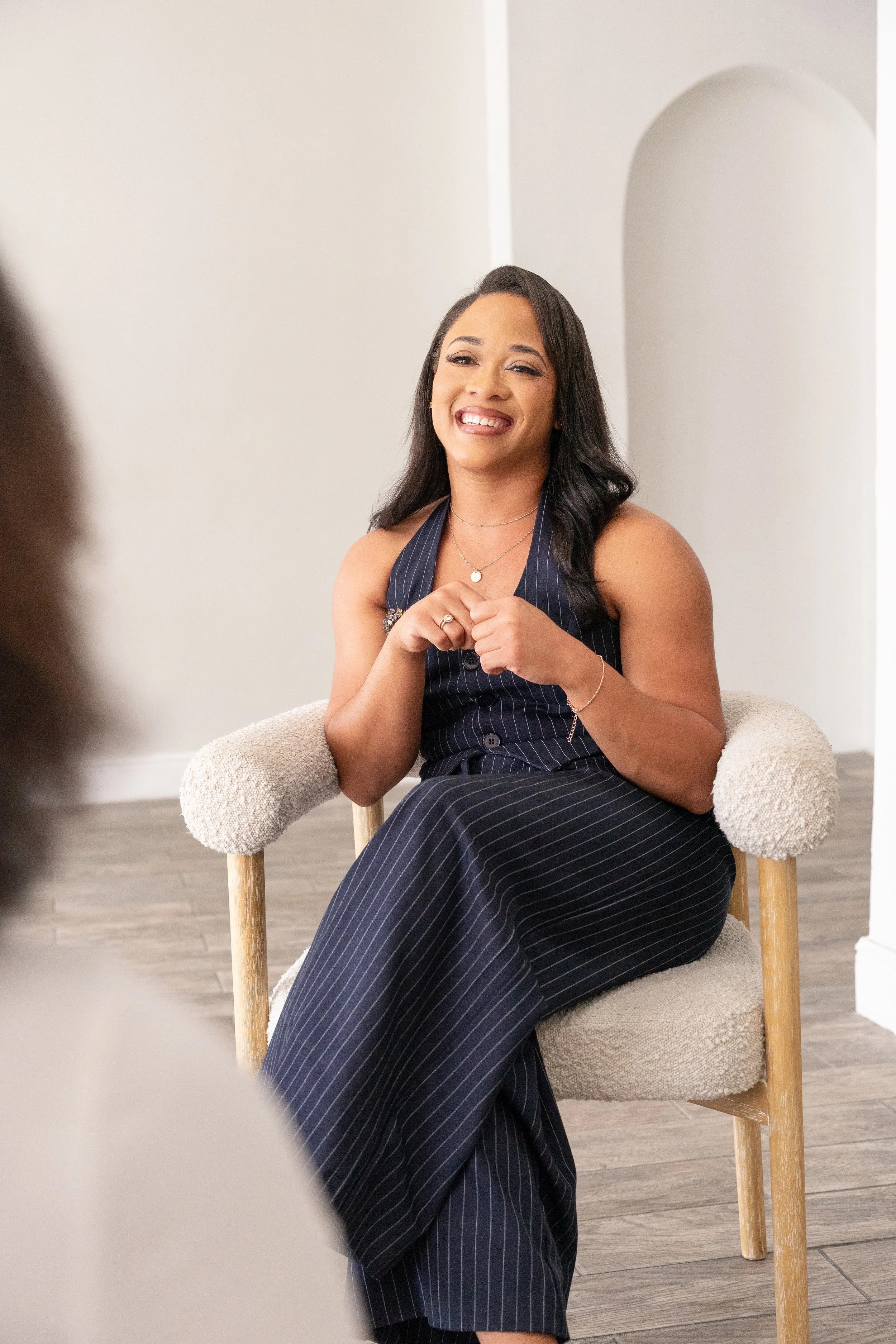
What the Gottman Method actually is
The Gottman Method was developed by Drs. John and Julie Gottman after decades of research with thousands of couples. Their work identified, with remarkable specificity, the patterns that predict whether a relationship will thrive or deteriorate — regardless of how much two people love each other.
What makes it different from other approaches is that it isn't primarily a talking therapy. It's a skills-based model. The goal isn't just to understand your patterns, it's to interrupt them in real time and replace them with something that actually works.
The method is built around what the Gottmans called the Sound Relationship House: a framework that addresses everything from how couples handle conflict to how well they know each other's inner worlds, share meaning, and build trust over time.
The research is unusually specific: the Gottmans identified that stable relationships need roughly five positive interactions for every negative one. That ratio (not the absence of conflict) is what separates couples who thrive from couples who drift.
What the Gottman Method Targets
Through their research, the Gottmans identified four specific communication patterns that are the most reliable predictors of relationship breakdown. They called them the Four Horsemen: criticism, contempt, defensiveness, and stonewalling.
You've probably experienced all four, on both sides of them.
-
01 Criticism -
Goes beyond complaining about a behavior. It attacks the person. "You never think about anyone but yourself" instead of "I needed more help this week."
-
02 Contempt -
is the most corrosive of the four. Eye-rolling, sarcasm, mockery — any communication that signals you see your partner as beneath you. The Gottmans found contempt is the si
-
03 Defensiveness -
is the reflexive response to feeling criticized — deflecting, counter-attacking, or playing the victim instead of genuinely hearing what's being said.
-
04 Stonewalling -
is emotional withdrawal during conflict — shutting down, going silent, leaving the room. It almost always happens when someone's nervous system is overwhelmed and they have no other tool.
Recognizing these patterns in yourself and your partner is the beginning. The Gottman Method then gives you specific antidotes to each one — not as a trick, but as a genuinely different way of responding that your nervous system can actually learn.
How I Use the Gottman Method in Sessions
I'm trained in the Gottman Method and bring it into my work with couples in Florida as a practical framework — not a rigid script. Every couple is different, and the method is designed to be adapted to the specific dynamics in the room.
Here's what that typically looks like in practice:
01
We start with a real assessment
Before we try to fix anything, we need to understand what's actually happening. The Gottman Method begins with a detailed assessment of your relationship — how you handle conflict, how well you know each other, how you process stress, what your repair attempts look like and whether they land. This gives us a specific picture of your strengths and the patterns that are getting in your way.
Most couples are surprised by what the assessment reveals. Often the surface argument (the one you've been having for years) isn't the real problem. The assessment helps us find what is.
02
We work on the patterns, not just the content
Most couples come in wanting to resolve the specific fight they just had. That's understandable. But if we only address the content without addressing the pattern underneath it, the same fight will come back with different words next month.
In sessions, I pay close attention to how you argue, not just what you're arguing about. I'll slow things down when I notice a pattern forming, name what I'm seeing, and help you both find a different entry point into the conversation. That shift from inside the argument to above it, is often the moment something actually changes.
03
You leave with tools, not just insight
Insight alone doesn't change behavior. Knowing why you do something doesn't automatically teach your nervous system to respond differently. The Gottman Method is structured to give you practical tools you can use between sessions: specific ways to start a difficult conversation, to repair after a fight, to signal that you need a break and actually mean it.
The goal is that what we work on in the room starts showing up in your kitchen, your car, and your 10pm conversations.
Who This Approach Works Best For
The Gottman Method tends to work particularly well for couples who:
Are stuck in recurring conflict patterns and can't seem to break the cycle
Feel more like roommates than partners — connected in logistics but not emotionally
Have one or both partners who tend to shut down during conflict
Are preparing for a major life transition — marriage, having children, a career change — and want to build a stronger foundation first
Have experienced a breach of trust and are trying to figure out whether and how to rebuild
Are already in a strong relationship and want to stay that way

It's worth saying clearly: the Gottman Method is not exclusively for couples in crisis. Some of the most productive Gottman-informed work happens with couples who are doing reasonably well but sense that something has quietly shifted, and want to address it before it becomes harder to fix.
What I Bring to This Work
I'm trained in the Gottman Method and combine it with my background in mediation and emotional regulation to offer something that's harder to find in a single therapist: both the emotional depth of therapy and the practical structure of a skilled conflict facilitator.
In couples sessions, I don't take sides. My job is to pay attention to the dynamic between you — the space where both of your patterns collide, and help you both see it from the outside. That shift in perspective is often what makes real change possible.
I work from a framework I describe as carefrontational. I'm warm, but I'm also direct. If I see something that's keeping you stuck, I'll name it. Not to assign blame, but because naming it clearly is the first step to changing it.
"My work focuses on what happens inside you when you try to say it, and that's often what actually gets in the way." — Kristin Crumbley, LMHC, LMFT
Gottman Method Therapy Online — How It Works
All of my sessions take place virtually, which means you can access Gottman-informed couples therapy from anywhere in Florida — without scheduling around traffic, childcare, or conflicting work schedules.
Virtual couples therapy using the Gottman Method is just as effective as in-person work. The research on telehealth outcomes supports this — and in practice, many couples find that being in their own space actually makes it easier to engage honestly.
You'll both join from the same device or different locations, whichever works for your situation. Sessions are 50 minutes and conducted through a secure, HIPAA-compliant video platform. No downloads required.

If you're curious about individual relationship therapy alongside couples work, that's something we can talk through.
Ready to Work Differently?
The first conversation is free — and there's no pressure either way.
Questions Couples Ask Before Starting
-
No. The method works across a wide range of relationship situations — from couples navigating a specific rupture to couples who are doing well and want to build stronger habits before life gets harder. You don't need to be falling apart to benefit.
-
This is more common than you'd think — and it's not a dealbreaker. The Gottman Method's practical, skills-based structure tends to resonate with partners who are skeptical of therapy precisely because it isn't just talking. There are concrete tools, specific frameworks, and measurable changes. The first session is also a free consultation, so both of you can get a feel for the approach before committing.
-
It depends on where you're starting from and what you're working on. Some couples make significant shifts in 8–12 sessions. Others work longer, especially when there's been a breach of trust or long-standing entrenched patterns. I'll give you an honest read on this after the assessment — not a vague "it depends" but a specific sense of what we're working with and what a realistic timeline looks like.
-
That’s completely okay. I frequently work with one partner individually to help you manage relationship stress, communicate more clearly, and stay grounded while things are still uncertain. Individual therapy can be a powerful place to start.
-
It's my primary framework for couples work, and I combine it with my training in mediation and emotional regulation. If something specific to your situation calls for a different tool, I'll use it. The goal is what actually works for you — not rigid adherence to a single model.